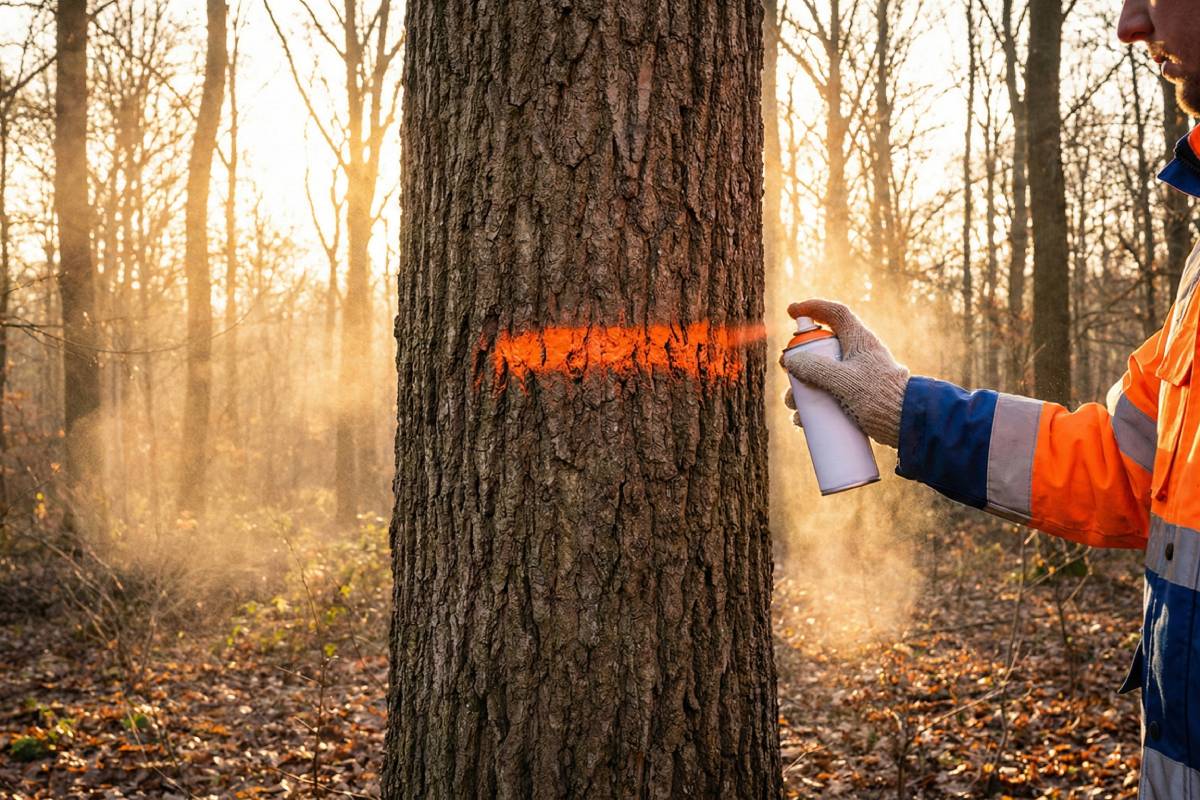
You need to mark a tree on your property for pruning, removal, or a boundary line, and grabbing that old can of spray paint from the garage seems like the easiest option.
But wait, trees are living, breathing organisms. Spraying harsh, synthetic chemicals directly onto the trunk could silently choke the tree, invite disease, or even cause a slow death.
Fortunately, you don’t have to guess and risk causing a costly landscaping disaster. In this guide, we will break down exactly how standard paint impacts tree biology and reveal the arborist-approved alternatives to keep your trees healthy.
TL;DR: Is Spray Paint Safe for Trees?
Standard spray paint is generally not safe for trees. Most aerosol paints contain Volatile Organic Compounds (VOCs) and oil-based chemicals that can damage the cambium layer and clog the bark’s lenticels, suffocating the tree. Instead, arborists recommend using specialized, water-based forestry or tree-marking paints.
How Standard Spray Paint Damages Trees (The Science)
To understand why a quick blast of hardware-store spray paint is dangerous, we need to look at tree biology.
Tree bark is not just dead armor; it is a highly active, porous barrier. Applying the wrong type of paint disrupts vital biological processes.
1. Clogging the Lenticels (Bark Suffocation)
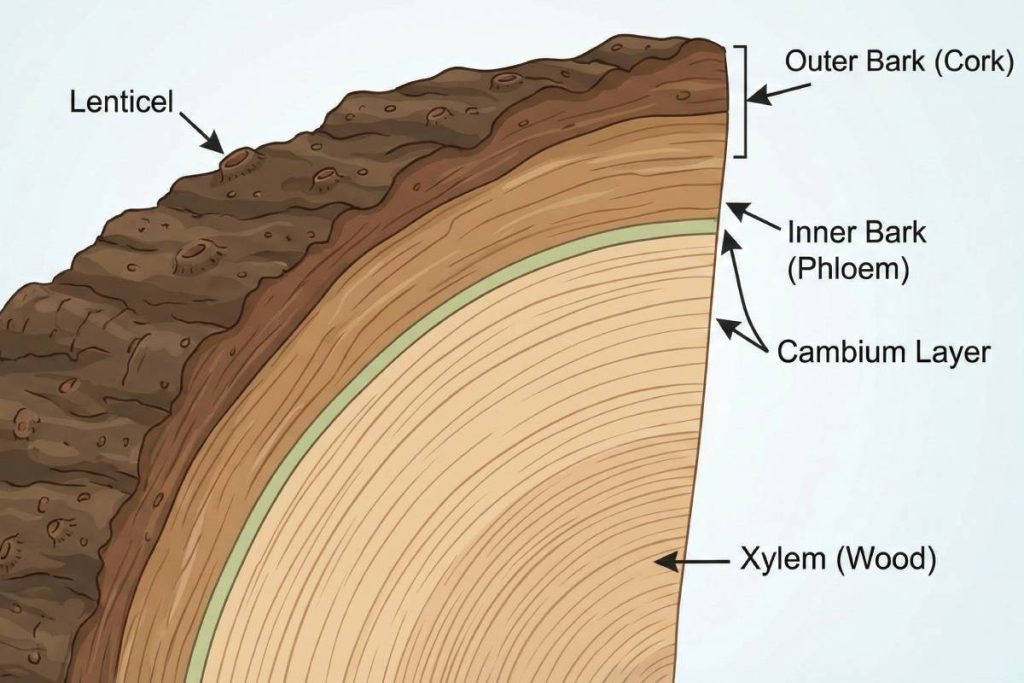
Trees “breathe” through their bark using tiny pores called lenticels. These pores allow for essential gas exchange, taking in oxygen and releasing carbon dioxide.
When you apply standard acrylic or oil-based spray paints, the paint creates an impermeable plastic-like film over these pores. This literally suffocates the painted section of the tree, stunting its growth and stressing the plant.
2. VOCs and Chemical Burns
Everyday spray paints are loaded with Volatile Organic Compounds (VOCs), solvents, and propellants designed to make the paint dry fast and stick to metal or wood.
When applied to a living tree, these harsh solvents strip away the bark’s natural protective oils. In severe cases, this causes a chemical burn, weakening the tree’s natural defenses against pests and fungal infections.
3. Penetrating the Cambium Layer
Just beneath the outer bark lies the cambium layer, a microscopic wall of living tissue responsible for producing new cells and transporting water and nutrients.
If toxic paint solvents seep through the outer bark, they can destroy the cambium tissue. This can cause “chemical girdling,” completely cutting off the tree’s nutrient supply and eventually killing it.
Young Trees vs. Mature Trees: Does Bark Thickness Matter?
Not all trees react to chemical exposure in the exact same way. The age, species, and bark thickness of the tree play a massive role in how much damage standard spray paint will cause.
While a thick-barked oak might survive a minor spray, a young sapling could easily die from the exact same exposure.
| Tree Type | Bark Characteristics | Vulnerability to Spray Paint | Arborist Recommendation |
| Young Saplings | Very thin, green, and highly porous bark. | Extremely High. Solvents easily penetrate the cambium layer. | Never use spray paint. Use flagging tape or tree bands only. |
| Smooth-Barked Trees (e.g., Birch, Maple, Beech) | Smooth, relatively thin outer layer with prominent lenticels. | High. Easily suffocated and highly susceptible to chemical burns. | Avoid all oil-based paints. Use specialized water-based tree markers. |
| Mature / Rough-Barked Trees (e.g., Old Oak, Pine) | Thick, corky, dead outer layers providing deep insulation. | Moderate to Low. Thick bark acts as a buffer against surface chemicals. | Forestry paint is still preferred, but minor exposure is rarely fatal. |
The Best Tree-Safe Alternatives to Standard Spray Paint
If you need to mark a tree for logging, thinning, property lines, or landscaping, you must use the right tools. Here are the top three arborist-approved alternatives to hardware store spray paint.
1. Specialized Forestry Paint (Tree Marking Paint)
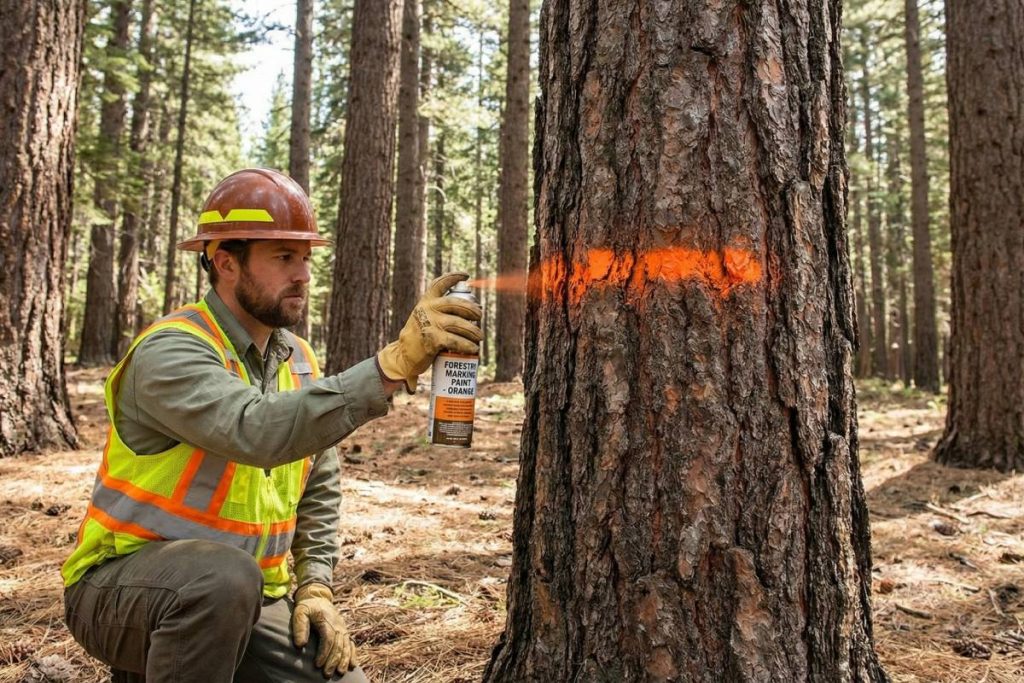
If you must use an aerosol spray, purchase purpose-made tree marking paint (also known as forestry paint).
If you are using temporary flagging tape to plan out your landscaping, you might also be wondering how often should trees be pruned to maintain an ideal canopy structure without causing unnecessary stress.
These formulas are water-based, highly visible, and heavily regulated. They are specifically engineered to sit on top of the bark without clogging lenticels or leaching toxic solvents into the tree’s bloodstream. This is the exact professional-grade approach trusted by industry experts and top-tier tree care services like Wiktora Bros Tree Works when managing land safely and responsibly.
2. Diluted Water-Based Latex Paint
For painting tree trunks (often done in orchards to prevent “sunscald” or pest infestations), standard interior water-based latex paint is safe if diluted.
You should mix a solution of 50% water and 50% white latex paint. Never use oil-based paints, exterior paints, or paints with added mildewcides, as these additives are highly toxic to plant tissue.
3. Flagging Tape, Ribbons, or Tree Bands
The absolute safest way to mark a tree is to avoid chemicals entirely. Using brightly colored surveyor’s flagging tape, physical tree bands, or biodegradable ribbons allows you to clearly mark a tree with zero risk to its health. Just ensure you don’t tie it so tight that it girdles the tree as it grows.
What to Do If You’ve Already Used Regular Spray Paint
Did you read this article after you already sprayed your tree with a can of standard Krylon or Rust-Oleum? Don’t panic, but act carefully.
Do not try to remove the paint with chemical solvents. Using paint thinner, mineral spirits, or acetone will push the toxic chemicals deeper into the tree’s vascular system, guaranteeing severe damage.
Instead, follow these safe removal steps:
- Wait for it to dry: Let the paint cure fully.
- Use a soft brush: Gently scrub the outer bark with a soft-bristled brush and warm, soapy water (use a mild dish soap).
- Let the tree heal: If the paint doesn’t come off, leave it alone. The tree will naturally shed its outer bark layers over time as it grows.
Conclusion
While reaching for a standard can of spray paint is convenient, it is simply not worth the risk to your tree’s health. The VOCs and oil-based chemicals in normal paint can suffocate bark, cause chemical burns, and destroy the vital cambium layer. By switching to specialized forestry paint, diluted water-based latex, or physical flagging tape, you can easily mark your property while preserving your landscape.
What kind of outdoor project are you currently working on that requires tree marking, and which of these tree-safe alternatives will you choose?


